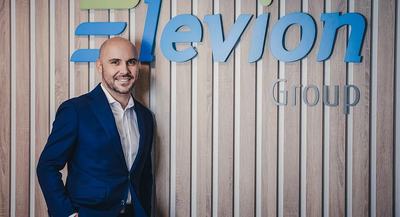
Speaking at Enlit Europe in Bilbao, Elevion Group CEO Jaroslav Macek highlighted that the success of Europe's energy transition relies on a pragmatic approach that balances climate targets with economic competitiveness and supply security. Technology-agnostic solutions, digitalisation, and streamlined permitting processes play a crucial role in practical execution.
As Europe continues to drive its energy transition forward, the focus is increasingly shifting from ambitious goal-setting to concrete execution. While climate targets are clearly defined, the real challenge lies in making clean energy affordable, reliable, and resilient simultaneously. In an interview at Enlit Europe in Bilbao, Spain, Jaroslav Macek, CEO of Elevion Group, explained how this balance can be achieved.
According to Jaroslav Macek, this requires a pragmatic approach that goes beyond ambitious targets. The right framework conditions for implementation are crucial—including faster permitting processes, flexible regulatory frameworks, and the targeted leveraging of private capital. Clean energy must not only drive decarbonisation but also be economically viable and secure.
Digitalisation and electrification play a central role in this transformation process. Fully digitalised energy systems enable better optimisation, increase efficiency, and enhance the security of supply. Although artificial intelligence is increasingly perceived as a driver of innovation, its full potential can only be realised once the necessary digital foundations have been laid. Digitalisation is thus a prerequisite for further technological advancement.
Practical solutions on a large scale Leveraging extensive experience across various renewable technologies, Elevion Group pursues a technology-agnostic approach. Rather than focusing on single solutions, the company relies on tailored concepts that work best in their specific context and deliver long-term value. Thousands of projects are executed annually, complemented by comprehensive lifecycle services to ensure sustainable performance.
Alongside technological expertise, collaboration is a decisive success factor. Long-term partnerships across different markets accelerate implementation and ensure that solutions remain scalable and adaptable.
Sustainability as a guiding principle Beyond technological aspects, Macek also emphasised the importance of sustainability as a foundational principle. It is not merely a strategic priority, but also an expression of personal responsibility that shapes corporate decision-making. Its consistent integration into operational processes and long-term strategies is critical for building future-proof energy systems.
Outlook The discussions at Enlit Europe highlight that a balanced and practically oriented approach is decisive for the success of the energy transition. Innovation, digitalisation, and electrification remain central drivers but must be accompanied by efficient execution and close collaboration.
With its broad expertise, flexible approach, and focus on viable solutions, Elevion Group continues to contribute to the development of competitive, secure, and sustainable energy systems in Europe.