Rising energy prices, tightening regulations and ambitious climate targets are fundamentally reshaping the real estate sector. Today, efficient and flexible building operation is no longer just a technical necessity – it has become a strategic factor for long-term competitiveness. Digital Energy Management Systems are playing a central role in this transformation.
Rising energy prices, tightening regulations and ambitious climate targets are fundamentally reshaping the real estate sector. Today, efficient and flexible building operation is no longer just a technical necessity – it has become a strategic factor for long-term competitiveness. Digital Energy Management Systems are playing a central role in this transformation.
Rising energy prices, tightening regulations and ambitious climate targets are fundamentally reshaping the real estate sector. Today, efficient and flexible building operation is no longer just a technical necessity – it has become a strategic factor for long-term competitiveness. Digital Energy Management Systems are playing a central role in this transformation.
Modern Energy Management Systems (EMS) enable building operators to gain a detailed understanding of how energy is generated, distributed and consumed across their properties. By continuously collecting and analysing operational data in real time, these systems make energy flows transparent and reveal optimisation potential that would otherwise remain hidden. Even small adjustments to operating parameters can lead to measurable reductions in energy consumption and operating costs, while also supporting long-term CO₂ reduction strategies.
Energy Management as a Strategic Tool
At the core of digital energy management is the ability to monitor and control technical building systems independently of manufacturers. Heating, power supply and ventilation systems can be connected through intelligent sensor technology and analysed using real-time software platforms. This holistic view enables operators to assess performance across systems rather than in isolated components.
Key features of modern EMS solutions include intuitive dashboards that visualise consumption data, automated control mechanisms that regulate energy use, and analytical tools that evaluate the efficiency of technical equipment. Based on these insights, targeted optimisation measures can be defined – for example, improving hydraulic balancing or integrating energy management data into existing maintenance and modernisation processes.
Beyond efficiency gains, data-driven monitoring also helps identify operational anomalies such as malfunctions or system oversizing. Inefficiencies in heating circuits or ventilation systems can be detected early and addressed proactively, preventing unnecessary energy losses and reducing wear on equipment.
Best Practice: Campus Tower Magdeburg
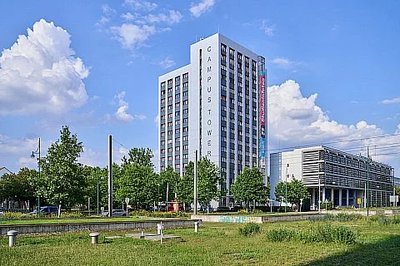
A practical example of how digital energy management delivers tangible benefits can be seen at the Campus Tower in Magdeburg. The 60‑metre‑high office and administration building uses an integrated energy management system to intelligently connect its heating, cooling and ventilation infrastructure.
Automated room control is combined with digital radiator management to dynamically adjust heat demand based on actual usage. Heating output is reduced during night-time hours, and systems automatically respond when windows are opened. This ensures that energy is supplied precisely where and when it is needed, avoiding unnecessary consumption.
Continuous data collection and visualisation provide building operators with full transparency and support targeted maintenance activities. In addition, digitally connected thermostats enable effective hydraulic balancing, ensuring even heat distribution throughout the building. The result is a combination of improved energy efficiency and enhanced occupant comfort.
From Consumption Monitoring to Operational Strategy
The Campus Tower demonstrates how existing building systems can evolve into an intelligent, responsive infrastructure. By linking analysis, control and maintenance, energy consumption becomes an actively manageable component of building operations rather than a fixed cost factor.
Experience from such projects shows that heating energy savings of up to 30 percent are achievable. In an environment of rising energy costs and increasing regulatory pressure, these savings represent a decisive advantage for property owners and operators alike.
Digital energy management is therefore not just a technical upgrade – it is a strategic investment in the future resilience, sustainability and economic performance of buildings.
Article based on insights by Jakob Braeuninger, Managing Director, Elevion Energy Solutions.
The full article is available to read at this link.